 Racing Club Hub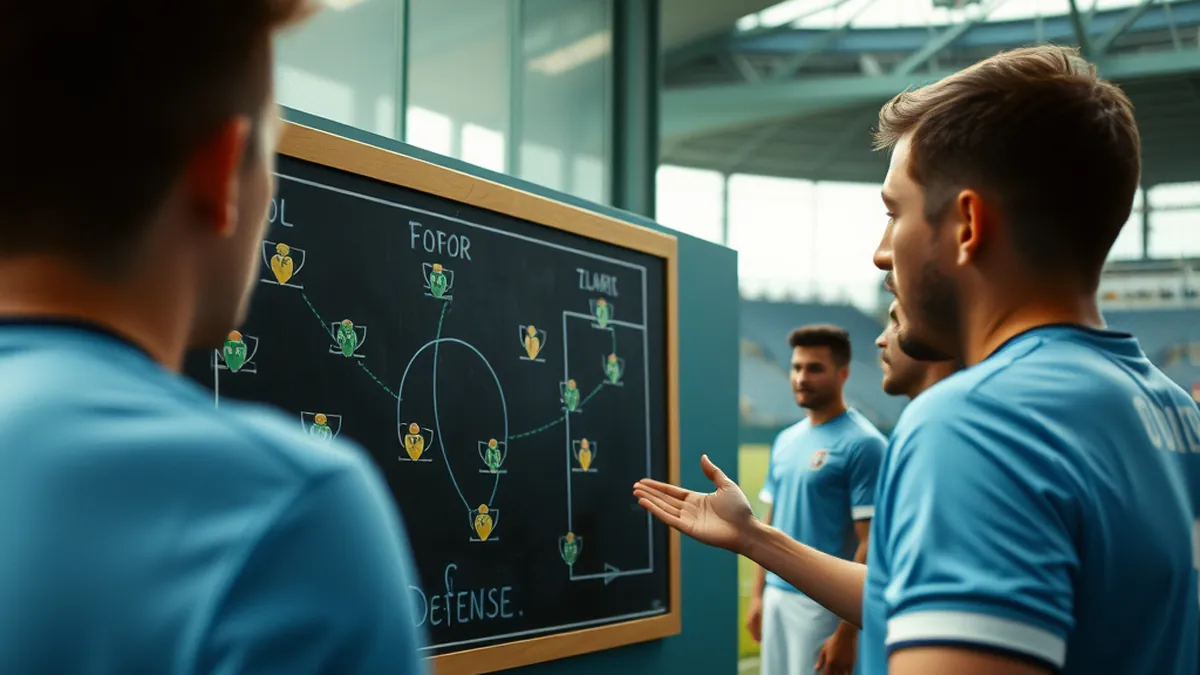
Tactical Adjustments for Racing Club: Enhancing Attack and Defense
As Racing Club strives for consistency in the Liga Profesional, the tactical landscape they operate within requires careful scrutiny. Recent performances have highlighted both strengths and weaknesses, indicating that the time is ripe for strategic adjustments that could elevate La Academia's game to new heights. Here, we delve into the tactical formation, key player roles, and suggest nuanced changes that can enhance their overall performance.
Formation Flexibility
Currently, Racing Club has predominantly operated in a 4-3-3 formation, which has allowed them to utilize their attacking wingers effectively. However, the team's recent struggles against compact defenses suggest that a shift to a 4-2-3-1 setup could provide the necessary fluidity in the final third. This formation allows for an additional playmaker to operate behind the striker, creating more opportunities and facilitating connection between midfield and attack.
Midfield Dynamics
The midfield has been a double-edged sword for La Academia. While G. Rojas and G. Martirena bring creativity, the central zone often lacks defensive cover, particularly against teams that counter-press effectively. Introducing a more defensively-minded midfielder alongside Rojas could balance the midfield dynamics, allowing Martirena to operate more freely in advanced positions. A player like E. Cannavo, with his tenacity and work rate, could provide the necessary steel, enabling Rojas to focus on orchestrating play without the burden of defensive responsibilities.
Winger Utilization
The wingers, often seen cutting inside to create goal-scoring opportunities, must be encouraged to stretch the pitch more. By maintaining width, Racing Club can exploit the space between the opposition's full-backs and center-backs, creating openings for overlapping full-backs or the central striker. A tweak in their positioning, potentially allowing them to stay wide and exploit the flanks, could lead to more crosses into the box, especially given the aerial prowess of their forwards.
Striker Role Optimization
Racing's current striker, A. Martínez, is a natural finisher but has at times been isolated due to a lack of support. By encouraging him to drop deeper into midfield, it can create overloads in the center and drag defenders out of position. This movement could open up space for late runs from midfielders, particularly from Martirena, who has shown an eye for goal when arriving late into the box.
Defensive Cohesion
On the defensive front, while S. Sosa has been a reliable presence, the backline has occasionally been exposed during transitions. To mitigate this, the full-backs should adopt a more conservative approach, prioritizing positional discipline over overlapping runs unless the team is in a solid attacking phase. This adjustment would not only fortify the defense but also allow the center-backs to maintain better positioning against counter-attacks.
Conclusion
In summary, Racing Club's tactical evolution hinges on a few strategic tweaks that could significantly enhance their performance. By adopting a 4-2-3-1 formation, strengthening the midfield, optimizing the roles of wingers and strikers, and ensuring defensive solidity, La Academia can look forward to a more dynamic and cohesive style of play. With these changes, Racing Club can harness the talent within their ranks and aim for a more consistent and successful remainder of the season.